


Seeking Repose: Marta
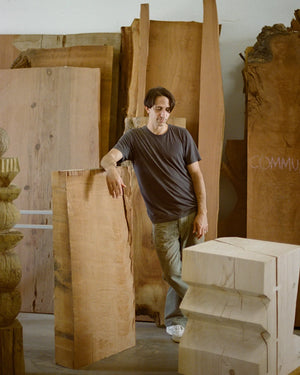
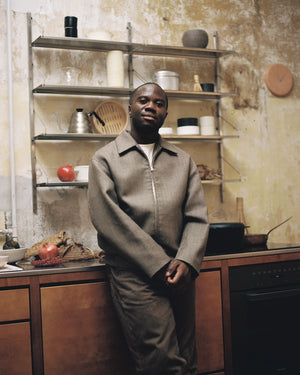
Seeking Repose is a concept that explores spaces through a new lens: that of respite and recharge. Investigating how spatial influences make for inward reflection and repose from daily life, we take our latest entry to Los Angeles, to spend some time with Marta founders Benjamin Critton and Heidi Korsavong.
In thinking about the concept of repose, definitions often orient themselves in relationship or contrast to activity. But that can miss some of the nuance of what repose provides: if repose is meant to give energy rather than take it away; nourish rather than deplete, does that necessitate stillness or solitude? For Benjamin Critton and Heidi Korsavong, the couple behind Marta gallery in Los Angeles, the social energy of their work and life together is often exactly what gives them the rejuvenation conjured by the word.


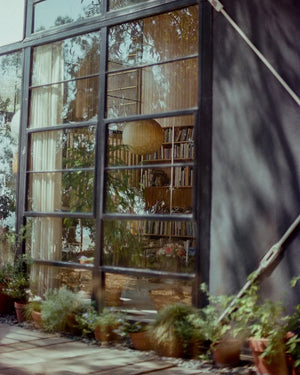
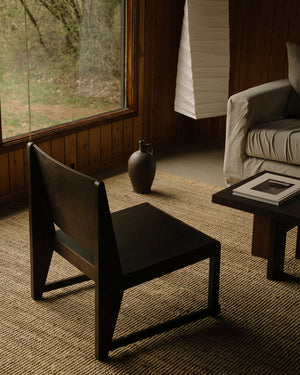
The two met while living in New York—Heidi is from Los Angeles originally, and Benjamin is from Connecticut. They’ve now been in L.A. for ten years together, and have created two spaces that feel the ease that comes with living somewhere as an adult for over a decade. Marta itself opened in 2019, and creates a space for connection among its artists and visitors alike. Their home, about fifteen minutes from the gallery, is a cabin-like Arts and Crafts home built in 1910, with walls of old douglas fir and redwood.
“We learned early on [when we moved here together] that L.A. is a very destination-oriented place, for better or for worse. It’s not far-fetched to think someone will want to see something specific and make a really deliberate trip to go there, and I think the gallery benefits from that.
It’s hard to stumble upon something because most often people are getting from A to Z in their cars—but we’ve found that the spirit of the deliberate visit can be a fast track to community, because if you find someone in your space, you know that something of a kinship with them already exists.”


This sentiment stands in contrast to the challenge that new arrivals to the city often describe: that it’s hard to find your community, and to meet people within the sprawl of a city where you need to know where to go. This is a testament to the approach to a gallery space Benjamin and Heidi have created with Marta, which is a space that’s open to welcoming kindred spirits, and creating more spaces for community to be found.
“The city is accommodating to so many different architectural typologies—neighborhoods function as islands, or lily pads.”
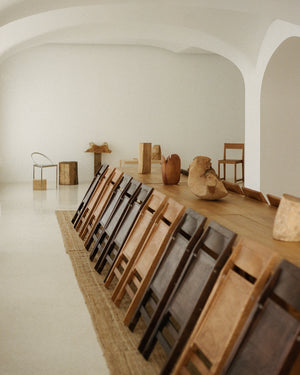
As an architecturally varied city, Heidi and Benjamin’s spaces are decidedly open, and designed with a light touch. Marta is located in a repurposed space: a former car garage (very “L.A.” in and of itself), where a construction company used to park their trucks. This results in a double-height space today that allows for light to enter freely, and for a mezzanine office to come into view within the space: an elevated vantage point offers an additional perspective from which to look onto an exhibition or an artwork, and to see how visitors perambulate within it. Benjamin jokes that as admirers of Jean Prouvé, he and Heidi lovingly refer to the building in which Marta is housed as a poor man’s Prouvé: made up of demountable structures, with its construction visible.
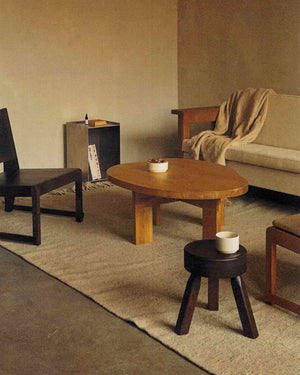
“L.A. is somewhere people often host in their homes. When an artwork leaves the gallery, we are often imagining where it will land in a domestic space; in a home that we can conjure up.”


On the mezzanine level of the gallery there is a meeting area that exists as something of a third space, where Heidi and Benjamin can plan additional programming, artists can spend time, and a separation can be found between their work space and the exhibition space itself. In Marta’s previous and first iteration, there was little of this kind of separation. In its current space, that step away to a new perspective is an important part of their daily routine, and one of the ways in which they find respite from a day-to-day where that separation doesn’t otherwise exist.
“There isn’t a lot of repose [between our work life and personal life], to come back to that word: if you were to look in on the gallery you would think we don’t rest. And it’s true in a way, but it’s because we get our rejuvenation and fulfillment from things that happen to be part of the rhythm of our work. There is a lot of care that is built into this industry.”


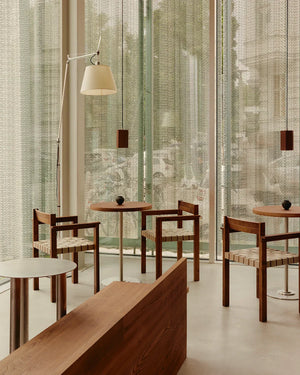
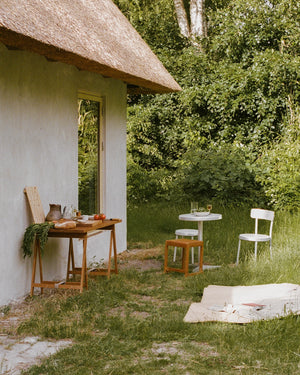
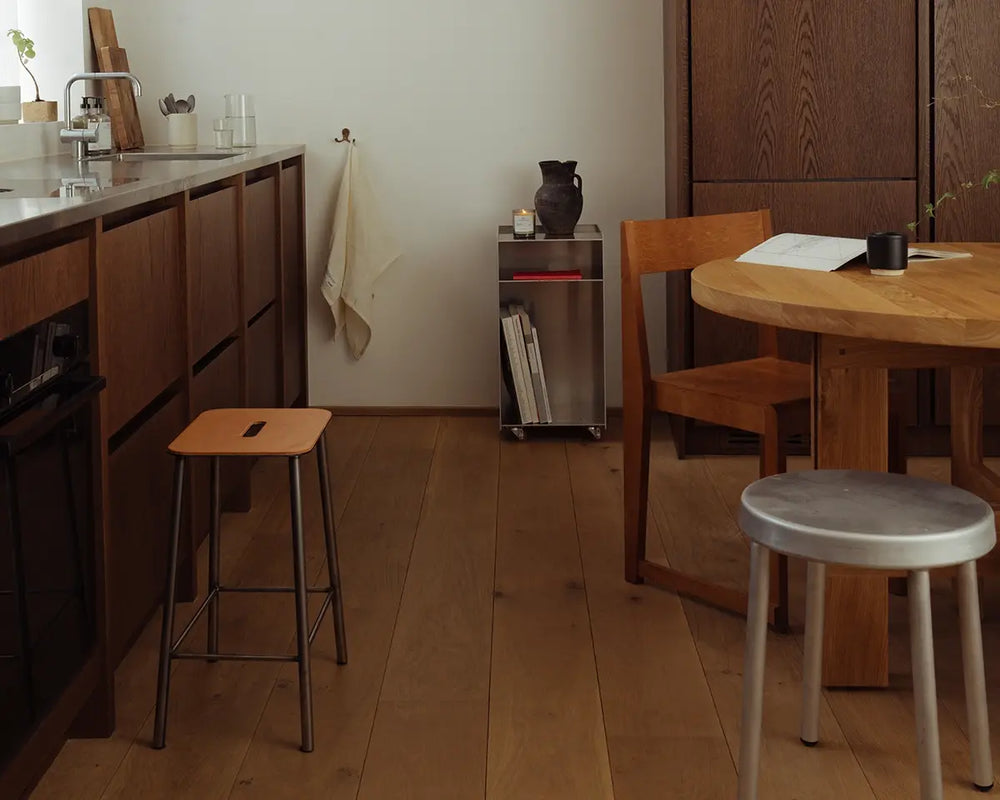
In part due to their geographic location, respite is also often found simply through the natural environment, even in the direct surroundings of the gallery. Marta’s immediate neighbors are a nursery called Plant Material and a shop called Building Block, Etc., all of which share a courtyard that is cloistered from the street. Beyond the entry gate lies an outdoor space covered by Sycamore trees creating a canopy overhead—almost like an outdoor room, where FRAMA’s Tasca and Petit Rond stools, chairs, and tables created a patio over the winter that invited visitors to linger. Heidi and Benjamin describe how, more often than not, this connection to nature is shared by the artists they work with: whether they experiment in the woodshop or tend to a garden, a level of communing with nature seems shared among their people.
“There is also an interesting bonus to the trees, which is that after they reach twenty feet in height they are protected by the city. So it’s a bit of an anti-development measure, and gives our little space as it exists now some longevity.


Another example of creating a sense of repose that isn’t necessarily about slowing, but about finding comfort and home, is the place that Benjamin and Heidi’s husky-shepherd mix Wiley occupies in their busy lives. Wiley was rescued from being lost at a Scientology Center in the city (they joke that maybe she was “going clear,” the term to describe someone who is escaping the cult-like religion). Friends rescued her and played matchmaker to the Marta-founders, who describe her as a little wolf—or coyote, like her Looney Tunes cartoon namesake, Wile E.


“She is rarely at the gallery with us due to her relentless shedding, but we’ve learned that she is actually quite careful around artwork: this seems to be a trait of huskies. She can sense her body very well, even as an energetic animal.”
Through this conversation, several shared traits between Wiley and her owners become clear: enviable energy, a need for nature, respect for artwork, and a sensitivity to what their bodies really need: whether that’s repose in a typical sense, or being recharged by the community that surrounds them.